
The power of women to make a positive impact in the industrial sector
As the established leader in the local portable air compressor and generator rental market, Rand-Air forms part of the global Atlas Copco Group. Through the regular training and development of its people and investment in the latest technology, Rand-Air maintains a sound track record of customer service excellence and exceeding customers’ expectations.
Both Atlas Copco and Rand-Air in South Africa are led by women and – with the national focus in August being on Women’s Month – the two leaders offer insights into qualities which have led them each to their current high-level positions in the equipment rental and industrial sector:
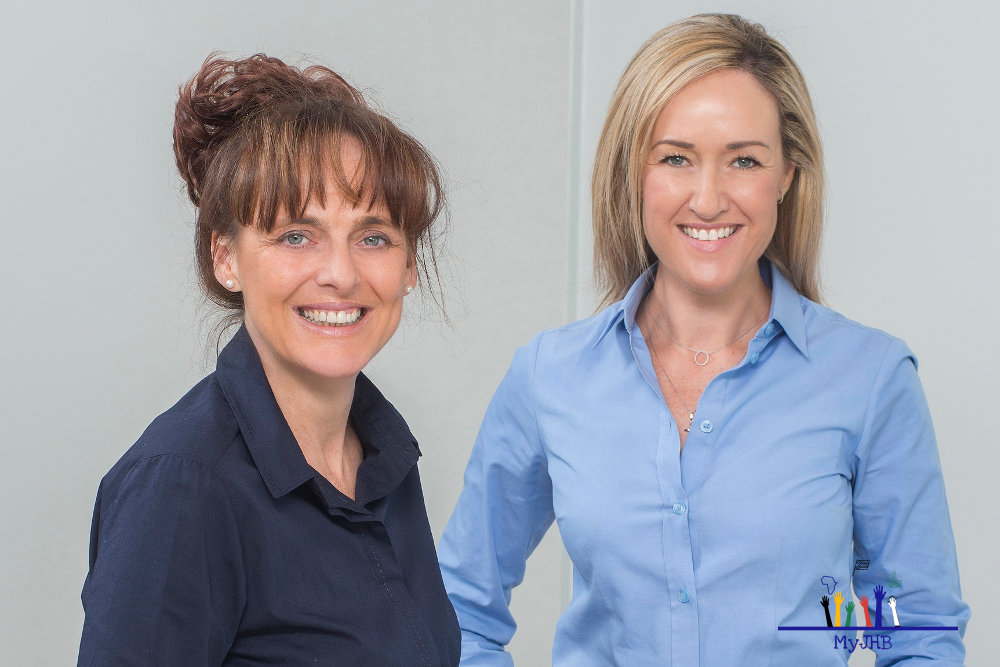
Wendy Buffa-Pace is Vice President and Managing Director of Atlas Copco Group SA; while Kim Coetzee is General Manager of Rand-Air. As such, they are both testament to the growing influence of women within senior positions, in what are typically considered male-dominated sectors of industry.
While each woman has risen to her present position via a different route, there are many synergies when it comes to business practices.
Buffa-Pace believes that throughout her career, by viewing every challenge as an opportunity, she was able to ‘read’ the business landscape and keep an eye open for opportunities. “I see most situations as an opportunity to learn something new and in which to find creative ways to add something different to the mix. I think having a sound mind and balanced outlook has afforded me the chance to not only see but take opportunities as they were presented,” she says.
Coetzee echoes this sentiment and states that a positive attitude and looking beyond her role – with a holistic overview – has helped her reach her present position. “I really believe that being positive and passionate within your role opens doors to extensive opportunities. Therefore, I am not limited by a title,” she adds.
Both are relatively new to their roles, encountering similar environments when they were each appointed. Coetzee says that her new role created excitement and enthusiasm and she was eager to embrace it: “As a go-getter, I was eager to take on the responsibilities – when, three months in, the CV-19 pandemic took hold in South Africa and everything basically ground to a halt!”
Buffa-Pace agrees: “It was as a well-known quote goes, a case of ‘the best laid plans of mice and men’ going awry. No sooner was I set to shoulder the role and make a positive impact, than Covid-19 arrived. That said, this is where the ability to draw on the resources of an agile team came to the fore,” she adds.
To this point, both women see close collaboration with their respective teams as crucial to developing an agile mind set and getting through a challenging period such as 2020, with work teams able to ‘pivot’ at short notice, adapting as needed and yet remaining simultaneously cohesive.
Nevertheless, both women emphasise that being an example to their teams is vital to coping with the changing landscape. Coetzee says: “While people have skills, you cannot teach intangibles like passion and this is where my team shines.
“All my experience has led to where I am right now: I am exactly where I want to be.”
Both women recognise that while there have been times that their individual journey has not been a direct route – and that there have been occasions where a different decision could have been made – there is absolutely no room for regret.
“While we all make mistakes now and again, ultimately, any decision I have made has served as part of the journey and led me to where I am now. As you gain acumen, you increase sound judgment and may make different decisions in the same circumstance the next time it occurs — if it does,” Buffa-Pace adds.
While the perception is that there are few women in senior roles in their sectors, both women report that the landscape is definitely changing in this regard.
“Rand-Air has always been female-dominated, even though the industry has traditionally been male-dominated. However, over the past decade, I am encouraged to see some change has occurred in the wider industry,” Coetzee points out.
Buffa-Pace concurs, adding: “I can say that I am privileged to be part of a progressive, global organisation which focuses on diversity across the board. It is not good enough to simply have women making up numbers, but to have women progressing in their careers and achieving in senior positions.”
Both feel that mostly – while there are always exceptions – women tend to be more realistic, but are not always as confident as their male counterparts in ‘selling’ themselves in the work environment. “We need to change this outlook and this mindset; we need to uplift each other – and ourselves – and gain confidence in our skills and self-worth,” Coetzee advises.
Both leaders believe that businesses generally could adopt strategies which create opportunities for women to venture into areas that would have traditionally been outside of their scope of knowledge or interest.
Buffa-Pace adds: “In my case, Atlas Copco created opportunities for me to learn how the business functions. I had the chance to be exposed to all areas of the company; and, over time, to gain the deep understanding thereof, which has helped me to attain my current position.”
Coetzee observes that the presence of women in senior roles creates a sense of desire within fellow women and a drive to achieve something similar; adding that, while women want to see other women succeed, within industry overall, the possibility of male inclusion within female-orientated forums could educate men to develop a more holistic understanding of women in the workplace – and in so doing, eradicate some gender bias.
Buffa-Pace adds that while she acknowledges that men need to be educated about women, it also behoves society to educate girls and women about the qualities they place importance on in male role models – to prepare the ground for, and assess, what they are prepared to accept in terms of societal roles and behaviours later in life.
“Men and women need leadership skills, and women bring diversity to the table,” Buffa-Pace says.
That being said, both women agree that the viewpoint which espouses that each gender is equipped with a different set of qualities and skills specific to that gender is not accurate; and that in fact, there is a blurring between the two genders in terms of attributes. “We all have a little bit of everything, and this is what creates the rich diversity which both genders bring to any situation,” Buffa-Pace comments.
Speaking to the need for women to support other women in the workplace, Buffa-Pace comments that throughout her career she has only ever encountered supportive women who have helped her. She points out that it is a matter of how one perceives the actions of other women when countered or criticised – not taking anything personally, but rather in the constructive spirit in which it is offered. “Think: ‘this person sees potential in me,’ rather than feel that you are being put down – and step up to the plate!” she urges.
Within the business world, there is sometimes the perception that women may appear abrasive and are sometimes perceived as aggressive. Buffa-Pace comments, “It is really a case of addressing issues as they arise, of ‘having the conversation’ – facing and not veering away from an issue. It is also the manner in which one addresses a situation, of developing a skill in which to address a sensitive issue without creating a defensive response. People will respond depending on how they are addressed.”
Coetzee suggests that as the landscape is changing, so are perceptions around gender differences and says, “As long as people in the business world are talking from the same level of maturity, there is no reason for aggression.”
Both Atlas Copco and Rand-Air encourage and support staff skills development and training. Coetzee describes her participation in a couple of initiatives for women: “I am part of a global gender diversity networking group which offers support and networking for women in similar positions, who can share experiences and talk about their challenges. I am very fortunate in that I have Wendy here in South Africa to bounce ideas off,” Coetzee comments.
She also points out, “There are programmes that focus on learning in the workplace and many of our team are busy completing their degrees.” Buffa-Pace adds: “Atlas Copco has also conducted networking and diversity programmes over a number of years, in a variety of forms, specifically for women. At the outset, we ran a programme called the Pleiades Network, and Kim was part of that. I can say with pride that the vast majority of participants went on to hold a variety of senior positions, and I put this down to having the right attitude. So a good attitude is vital: that would be my one piece of advice to young women starting out in business,” she says.
“My one piece of advice would be ‘don’t be so hard on yourself, and believe that whatever you put your mind to, you can achieve!” Coetzee concludes.

 Gift of the Givers as well as the aged, the visually impaired and a children’s home, get much-needed masks
