
In the days of apartheid it used to tickle me no end to see patrons and listeners earnestly bopping to these songs whilst not knowing at all the provenance or message behind them.
Imagine a short pant white, with a right wing demeanor ‘goiing’ to these songs in the disco, at the festival or wedding and you realise just how dumb banning these songs was.
We missed a real opportunity to nation build with the apartheid censorship madness of the time!
Banned South African Songs:
Weeping – Bright Blue (1987): Often called the greatest South African song of the century. Written by Dan Heymann while he was a conscripted soldier, the lyrics use a metaphor about a man living behind a wall to describe President P.W. Botha’s isolation and fear. It famously sneaks in the melody of the then-banned Nkosi Sikelel’ iAfrika during the bridge.
Asimbonanga – Johnny Clegg & Savuka (1987): The title means We have not seen him, referring to the imprisoned Nelson Mandela. It was one of the first popular songs to openly name Mandela and other fallen heroes like Steve Biko and Neil Aggett.
Africa – Juluka (1982): A hit for Johnny Clegg’s first band, it was banned on some state radio stations for mixing English and Zulu, which violated the apartheid government’s purity policies.
Bring Him Back Home (Nelson Mandela) – Hugh Masekela (1987): Recorded while Masekela was in exile, this became the definitive global anthem for the Free Mandela campaign. *
Black President – Brenda Fassie (1989): A powerful pop-protest track that mourned Mandela’s 1963 arrest and prophetically celebrated his future presidency.
Whispers in the Deep (Phinda Mzala) – Stimela (1986): Ray Phiri’s band used the metaphor of whispers to urge people to stop talking in secret and take action against oppression.
Hillbrow – Johannes Kerkorrel (1989): Part of the Afrikaner Voëlvry movement, this rock track used Afrikaans to protest the conservative status quo and the military draft.
Free Nelson Mandela – The Special AKA (1984): A high-energy UK hit that brought the anti-apartheid struggle to dancefloors across Europe.
Gimme Hope Jo’anna – Eddy Grant (1988): A reggae track where Jo’anna personifies Johannesburg and the apartheid government. It was banned by the SABC but loved by the public.
Sun City – Artists United Against Apartheid (1985): Organized by Steven Van Zandt, this star-studded track (featuring Bruce Springsteen, Miles Davis, and others) declared a boycott of the Sun City resort.
Another Brick in the Wall (Part 2) – Pink Floyd (1979/1980): While international, it was famously banned in South Africa after Black students adopted the chorus We don’t need no education as an anthem against inferior Bantu Education.
BMW – Johannes Kerkorrel & Die Gereformeerde Blues Band (1989): This track was labeled “repulsive” by censors for its indictment of white middle-class complacency and references to the ANC.
Missing – Savuka (Johnny Clegg) (1987): Explicitly about government repression and people disappearing in police custody, the SABC viewed it as a direct threat to state security.
Rastas Never Die – Lucky Dube (1984): Dube’s first reggae album was banned in 1985 because the regime felt his lyrics were too politically charged.
Just Another Ruler – Roger Lucey (1979): Lucey was a major target of the Security Branch; none of his music was allowed on the SABC due to lines referencing the June 1976 Soweto Uprising.
Africa – Juluka (1982): Despite being a major hit on independent Capital Radio, the SABC refused to play it because it mixed English and Zulu, violating their language purity policy designed to keep ethnic groups separate.
Sankomota (Self-titled debut) (1984): This band from Lesotho had their first release deemed “undesirable” specifically for mixing multiple languages on one track.
Energie – Johannes Kerkorrel (1989): Banned for including the word kak and for allegedly inciting Afrikaner youth toward violence.
Atlantis – Laurika Rauch (1980s): Written by Anton Goosen, this song about the forced removals of Coloured people from District Six was kept off the air.
Sugar Man – Rodriguez (1970): While Rodriguez was a superstar in SA, this specific song from his Cold Fact album was officially banned for promoting drug use.
Spanish Train – Chris de Burgh (1976): This international hit was banned for blasphemy because it depicted a card game between God and the Devil.
Hou My Vas Korporaal – Bernoldus Niemand (1983): A satirical track that mocked the compulsory military draft. It became an unofficial anthem for the End Conscription Campaign (ECC) and was promptly banned for its anti-military tone.
Meadowlands – Strike Vilakazi (1956): While it sounded like a cheerful jive, it actually mourned the forced removals from Sophiatown. It became a massive hit for Miriam Makeba and other artists before being targeted by authorities.
Schoolboy – Asylum Kids (1981): This punk/new wave track was banned for being too rebellious, with lyrics like Rules and regulations only suffocate viewed as a threat to school discipline.
Nants’ indod’ emnyama (Watch out Verwoerd) – Various artists: A direct taunt to the architects of apartheid. It was frequently sung at rallies and eventually banned from all state-controlled media.
Another Brick in the Wall (Part 2) – Pink Floyd (1979): Though international, it was banned in South Africa in 1980 after Black students adopted its We don’t need no education chorus as a protest against inferior schooling.
Africa – Juluka (1982): Johnny Clegg and Sipho Mchunu’s breakthrough hit was rejected for airplay on white stations because it mixed English and Zulu, which violated the SABC’s strict policies on tribal purity.
BMW – Johannes Kerkorrel (1989): From the Eet Kreef album, this song was banned for mentioning the ANC and referencing drugs, while censors found its critique of middle-class complacency repulsive.
Sit di af – Johannes Kerkorrel (1989): A satirical track targeting then-President P.W. Botha; censors took offense at the disparaging way it referred to the head of state.
Ishmael – Abdullah Ibrahim (1970s): Banned for blasphemy after a religious council objected to the use of Quranic verses in a musical setting.
Biko – Peter Gabriel (1980): Written about the death of Black Consciousness leader Steve Biko in police custody, this song was strictly prohibited on South African radio.
Gimme Hope Jo’anna – Eddy Grant (1988): Despite its upbeat reggae rhythm, the lyrics personified Johannesburg as Jo’anna to criticize the oppressive government, leading to an immediate SABC ban.
Hugh Masekela:
* Recalling how he came about writing this song Masekela wrote:
Around the end of March, I received a call from Bra Mathizo, an ANC veteran exiled in “Gabs,” as Gaborone is fondly called.
“Hugh, I have a letter for you from home. Can I come and drop it off?”
Bra Mathizo arrived shortly. He sat down for tea and waited for me to open and read the short letter that had been smuggled out of Pollsmoor Prison in Cape Town. The sender had a very beautiful handwriting.
“Dear Hugh,
I wrote this letter to wish you an exceptionally happy 46th birthday and proudly congratulate you on the music school you have started. Also the new recording studios where you have produced such popular music that brings joy to so many. May you have continued good fortune in your admirable endeavours. Kindly extend my loving regards to your wife Jabu and your beautiful little Deliwe. Keep up the good work.
Affectionately,
Nelson Mandela”
My birthday was coming up on the fourth of April. I was totally overwhelmed by this letter from a man who had been in prison for 21 years wishing me, a free person, prosperity. I sat there dumbfounded for quite a while before thanking Bra Mathizo, who made a quick exit on realizing the surging emotion swelling inside my restless soul.
With tears in my eyes, I rushed to the piano across our tiny sitting-room lounge and began to sing in a very loud outburst
“Bring back Nelson Mandela! Bring him back home to Soweto! I want to see him walking down the streets of South Africa. I want to see him walking hand-in-hand with Winnie Mandela.”
Jabu came in running from the backyard with a big smile on her face. “Hughie, when did you write that song? I’ve never heard it before”
“I didn’t write it, Nelson Mandela just sent it.”
Peter Gabriel:
Peter Gabriel has described “Biko” as his first overtly political song, a work that “helped shape” him as much as he shaped it. Writing it was a pivotal moment that led to his lifelong involvement in human rights activism.
Gabriel famously described himself during the writing process as a “white, middle-class, ex-public schoolboy” observing the horrors of apartheid from a distance. He felt more like a “reporter” than an insider, shock-driven by the brutality of Biko’s death despite the international attention on his imprisonment.
Gabriel was deeply impressed by Biko’s “intelligence, rationality, and lack of hatred”. He noted that Biko’s writings were grounded and avoided the polarized extremes of politics, leading Gabriel to believe Biko would have become a major global statesman had he lived.
Gabriel stated that while music cannot directly bring about political change, it has a role in “informing and influencing people” so they can then play a part in making change happen. He noted that “Biko” outgrew his expectations to become a global human rights anthem.
In recent years, Gabriel has commented that the song’s message remains sadly necessary as racism and nationalism are again on the rise globally. He noted that while the white minority government in South Africa is gone, the “racism around the world that apartheid represented” has not disappeared.
Performing the song in post-apartheid South Africa was deeply emotional for Gabriel. He recalled getting “shivers down my spine” while performing it in front of leaders like Nelson Mandela, Archbishop Desmond Tutu, and the Biko family.
Hou My Vas, Korporaal
The story of “Hou My Vas, Korporaal” is essentially the origin story of the “Alternative Afrikaans” movement. It’s a fascinating bit of South African history because the song was written by an English-speaking “soutie” who ended up revolutionizing Afrikaans rock.
The song was released in 1983 by James Phillips, a musician from Springs. To release this specific track, Phillips adopted the pseudonym Bernoldus Niemand (roughly translated as “Bernoldus Nobody”).
The name was a clever double-play:
It protected his identity from the authorities.
It poked fun at the “nobody” status of a conscripted soldier in the SADF.
At the height of the Border War, military service was compulsory for young white men. Most patriotic songs of the time were stiff, march-like, and heroic. Phillips did something completely different:
He wrote from the viewpoint of a vulnerable, confused young conscript (a troepie).
The title, “Hold me tight, Corporal,” is deeply ironic. Instead of portraying the Corporal as a heroic leader, the song treats him as a bizarre, terrifying parental figure. The narrator isn’t a brave soldier; he’s an infantilized young man “playing war” while his “best days” go by.
The track starts with a heavily accented voice asking, “Excuse me, are you recording?” and features a loose, almost “busker-style” sound that felt authentic and rebellious compared to the polished propaganda of the state broadcaster (SABC).
The song was promptly banned by the SABC, but it leaked into the consciousness of the youth. It became the unofficial anthem of the End Conscription Campaign (ECC).
More importantly, it laid the foundation for the Voëlvry Movement. Musicians like Johannes Kerkorrel and Koos Kombuis heard “Hou My Vas, Korporaal” and realized they could use Afrikaans to criticize the government and the “establishment” using the energy of rock and roll.
James Phillips (as Bernoldus Niemand) managed to capture a very specific South African “angst.” He showed that protest didn’t always have to be a shout; sometimes, a wry, satirical “hug” for a corporal was the most subversive act of all.
Sadly, Phillips passed away in 1995 following a car accident, but “Hou My Vas, Korporaal” remains one of the most important records in the history of South African protest music.
Sit di af – Johannes Kerkorrel
“Sit dit af” (Turn it off) is one of the most famous acts of musical rebellion in Afrikaans history. It wasn’t just a song; it was a direct, satirical attack on the face of the apartheid state.
Released in 1989 on the groundbreaking album Eet Kreef!, the song was a critique of the propaganda broadcast by the SABC (South African Broadcasting Corporation). At the time, the SABC was the primary mouthpiece for the National Party, often featuring long, stern televised addresses by then-State President P.W. Botha (known as Die Groot Krokodil).
The lyrics urged South Africans to simply “turn off the TV” to escape the state’s “hallucination” and manipulation. It mocked the repetitive, fear-mongering nature of the news broadcasts.
The song is legendary for its performance during the Voëlvry Tour, a cross-country rock ‘n roll movement of “rebel” Afrikaners.
During live shows, Kerkorrel would often perform the song with a rubber mask of P.W. Botha or mimic his finger-wagging mannerisms.
The SABC officially banned the song. Censors claimed it referred to the State President in a “disparaging way” and was “harmful to the relations between sections of the population.”
Ironically, the ban made the song even more popular among university students and young Afrikaners who were disillusioned with the military draft and the conservative status quo.
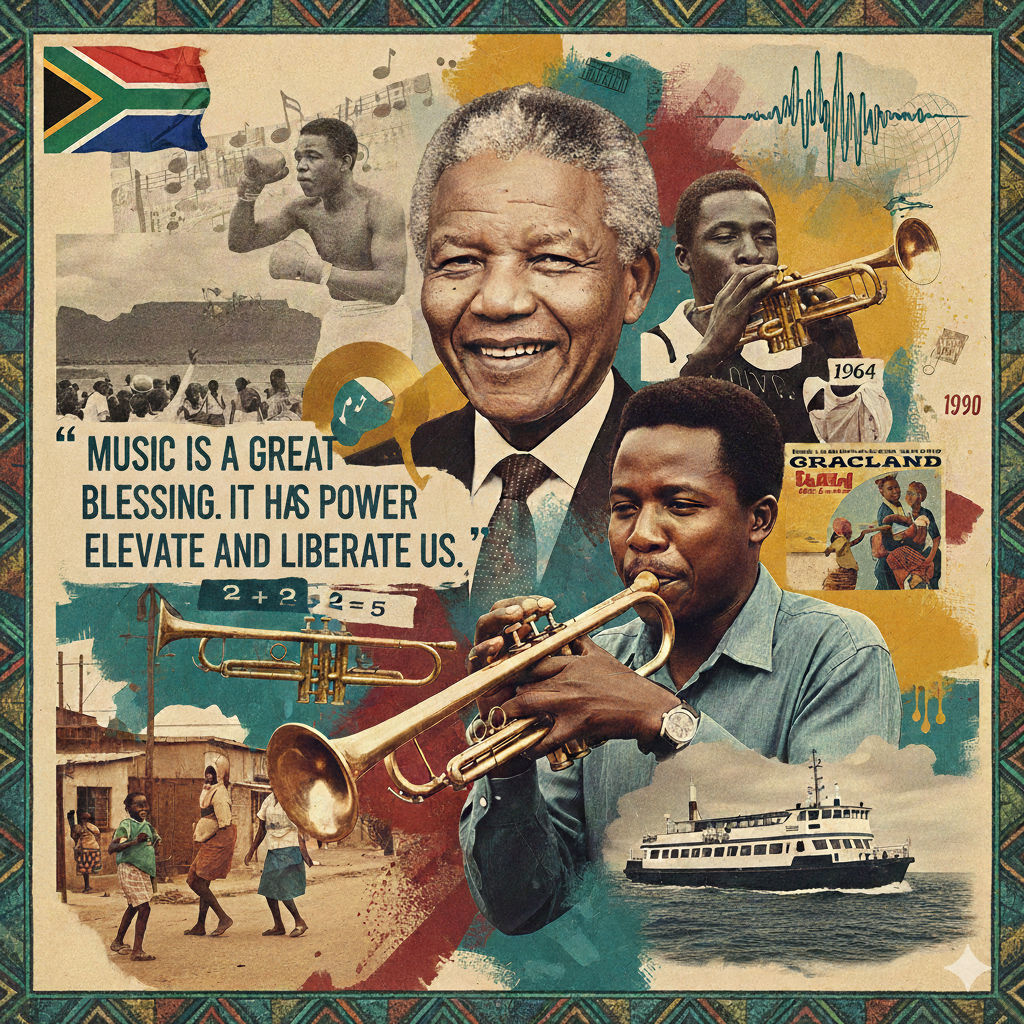
Images:
Video:
South African Struggle Songs – This is the original uncensored music video for Bright Blue’s seminal South African song `Weeping’. It was filmed by Nic Hofmeyr on the Cape Flats in the late nineteen eighties, during the State of Emergency. Catch the `Nkosi Sikelela’ bridge, snuck onto SABC airwaves despite the anthem’s banning, and look out for the late Basil `Manenberg’ Coetzee on sax, filmed in Manenberg township! The song has been covered by Josh Grobin, Vusi Mahlasela and others.
Links:
MyZA Events: https://MyZA.co.za/events – free adverts for all your events.
CLICK HERE to submit your press release to MyPR.co.za.
Free Press Release Submissions from MyPR.co.za

 “NO!”: To Johannesburg Deputy Mayor Position