Elderly People March in Pretoria, Demanding Houses
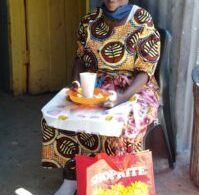
Advertorial: Elderly People March in Pretoria, Demanding Houses: Elderly people from Johannesburg marched in Pretoria on Wednesday …


MyJHB
Stuff from Johannesburg
Advertorial: Elderly People March in Pretoria, Demanding Houses: Elderly people from Johannesburg marched in Pretoria on Wednesday …
Advertorial: Benoni’s elderly march for electricity: About 50 Actonville residents marched to municipal offices on Wednesday to ask for …
Advertorial: Moving home with the elderly and the senior citizens: If you’re moving home with elderly or senior citizens, …

Johannesburg, Gauteng, South Africa in the news: Govt reserves single dose J&J jab for rural areas & elderly at Sassa pay …
Johannesburg, Gauteng, South Africa in the news: Elderly woman paints a positive picture as she receives vaccine: Ethelwyn van Eck, 84, …
MyPR: Shoprite and Checkers act as ‘safety net’ for hungry children and elderly in Alex: Shoprite and Checkers act as ‘safety net’ for …
The very existence of Johannesburg is a geological fluke. Unlike most major global cities, Johannesburg was not built near a river, a coast, or a natural harbor. It sits 1,753 meters above sea level on a rocky ridge called the Witwatersrand (Ridge of White Waters). This ridge is the edge of the world’s largest known gold deposit, formed over 2 billion years ago when an ancient inland sea began to evaporate, leaving behind layers of gold-bearing conglomerate.
When George Harrison, an Australian prospector, stumbled upon an outcrop of gold on the farm Langlaagte in 1886, he triggered a “gold rush” that changed the course of African history. Within a decade, a dusty collection of tents and wagons transformed into a permanent city of brick and mortar. The “Main Reef” proved so vast that it eventually produced nearly 40% of all the gold ever mined in human history. This geological wealth dictated the city’s layout: the mining belt runs east-to-west across the city’s center, creating a physical divide between the wealthy northern suburbs and the industrial, working-class south. Today, while most mines within the city limits have closed due to the extreme depth and cost of extraction (some mines reached over 3.9 kilometers underground), the physical legacy remains in the form of “mine dumps”—massive yellow-white hills of crushed rock and sand that define the Joburg skyline.