‘Innovation Station’ for Rail and Infrastructure Sectors
Advertorial: ‘Innovation Station’ for Rail and Infrastructure Sectors: National Transport Minister Barbara Creecy has again outlined the …


MyJHB
Stuff from Johannesburg
Advertorial: ‘Innovation Station’ for Rail and Infrastructure Sectors: National Transport Minister Barbara Creecy has again outlined the …
Advertorial: Clarification on Statement Made by Johannesburg Water Regarding Power Supply to Palmiet Station: Wednesday, 6 November …
Advertorial: Protesters Block West Rand Roads, Demanding Schools, Clinic and a Police Station: Fleurhof residents blocked roads with …

Advertorial: Royal St Andrews Hotel and Guido’s Port Alfred Donate R100k To NSRI Station 11 For Water Safety At Rip Curl GromSearch: …

Advertorial: Pietermaritzburg station back in action but train service not up to scratch: The Shosholoza Meyl had its first two trips …
Advertorial: Komati power station repurposing on PCC agenda: Thursday, November 16, 2023 The Presidential Climate Commission (PCC) is …
Johannesburg, Gauteng, South Africa in the news: Radio veteran Ravi Naidoo at the helm as 947 station manager: Johannesburg’s …
Johannesburg in the news: Metrorail ejects DA from Park Station – Mmusi Maimane: Earlier this morning I visited Park Station in …
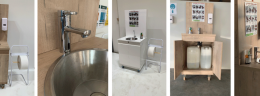
MyPR: New Mobile Touchless Hand Sanitising Station – A First For SA and a Safe Solution To Stop The Spread Of Germs: Using soap and …
The Ferreira Dump began growing in the late 1800s, composed of the crushed rock and chemical residue left over after early, inefficient mining processes had extracted as much gold as the technology of the time allowed. By the 1960s, it was a flat-topped, man-made mesa overlooking the city. In a stroke of entrepreneurial genius, the surface was tarred and the Top Star Drive-In was opened. It quickly became a South African institution. Its appeal was not just the movies, but the unparalleled view: as the sun set, the massive white screen would flicker to life against a backdrop of the glowing skyscrapers of the Central Business District, separated from the viewer only by the elevated M2 highway.
In the decades before television arrived in South Africa (1976), the Top Star was a primary social hub. It was a democratic space in an undemocratic time; while the city below was strictly segregated, the “car” served as a private bubble that allowed a degree of social freedom not found in traditional theaters. For many Johannesburgers, the Top Star was a site of nostalgic rites of passage—first dates, family outings where children were piled into the back of station wagons with blankets and flasks of tea, and the Saturday “car market” where the parking lot transformed into a sprawling hub for buying and selling second-hand vehicles.